AFCN’s 3rd Regional Meeting of 2025: Improving Methodologies and Claim Selection
 September 23, 2025
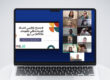
The Arab Fact-Checkers Network (AFCN) from ARIJ, held its third regional meeting of 2025 on Tuesday, September 23. The event brought together over 50 fact-checkers representing 23 organizations from 13 Arab countries to advance fact-checking methodologies, enhance the quality of reports, and refine the process for selecting claims worthy of verification.
The meeting was opened by ARIJ Director General, Rawan Damen, who addressed the challenges fact-checkers have faced in 2025 and discussed the AFCN community’s response to these challenges.
Following her remarks, fact-checking expert Dr. Arwa Kooli, delivered a presentation on the quality standards of fact-checking organizations and outlined a development path for their work. Her insights stemmed from her participation in “Masar” mentorship program, where she guided five organizations in refining their methodologies throughout 2025. Additionally, her contributions drew upon the network’s comprehensive three-year study (2023-2025) which examined information disorder and the critical role of fact-checking in its mitigation.
Moderated by AFCN Manager Saja Mortada, the meeting focused on key pillars aimed at elevating the quality and credibility of content produced by Arab fact-checking organizations.
Participants engaged in in-depth discussions on claim selection mechanisms, emphasizing criteria of public importance and potential for harm to ensure resources are directed toward the most pressing and impactful issues in the Arab public sphere.
The dialogue also addressed the critical need to periodically update fact-checking methodologies to keep pace with the rapid evolution of disinformation tactics, including AI-generated content, thereby safeguarding the quality of published reports.
Furthermore, attendees reviewed the adherence to the AFCN Code of Principles, the network’s ethical and professional charter, reaffirming the importance of transparency, impartiality, and balance as cornerstones of public trust.
The meeting concluded with several key recommendations to enhance the effectiveness of fact-checking efforts in the region:
-
- Focus on impact and harm: Prioritize claims with the greatest societal impact and potential for harm, adopting clear criteria for their assessment and selection.
- Deepen content and investigations: Shift from rapid debunks to producing in-depth investigations and long-form reports that uncover disinformation campaigns and their sources.
- Expand monitoring and sources: Develop monitoring strategies to include traditional media alongside social media platforms, diversifying sources for comprehensive coverage.
- Commit to methodology and continuous improvement: Ensure strict adherence to the network’s methodologies and principles, with periodic reviews and updates to maintain the highest standards.
- Enhance collaboration and joint initiatives: Encourage joint projects among member organizations to produce high-impact, cross-border work and unify efforts against transnational disinformation.
- Invest in media literacy: Intensify efforts to raise public awareness and develop critical thinking skills as a primary, sustainable defense against misinformation.
The positive and collaborative atmosphere of the meeting was echoed by participants. “This meeting renews our spirit of collaboration in the fight against disinformation in the Arab world and strengthens our passion for our work and its development,” said Dina Ibrahim, Director of Egypt’s Akhbar Meter organization.
This sentiment was shared by Rabeb Aloui from Tunisia’s BNCheck, who described the meeting as “fruitful, opening our eyes to crucial aspects of our daily work that we often overlook but are of the utmost importance.”
Farouq Alkamali from Yemen’s YoopYup initiative, highlighted the network’s supportive role: “What distinguishes this community is the mutual support and integrated work. Despite being in different countries, we overcome obstacles thanks to the continuous collaboration among members.“
“This meeting confirms that selecting claims based on the scale of harm and impact on local communities is the essence of our work,” affirmed Fatima Al-Zahraa Rasras from the Jordanian organization Chayyek.
Ghias Aljundi, the director of Syria’s Fareq organisation, summarized the meeting’s impact, stating, “In my opinion, this was one of the most important sessions to have discussed the advancement of fact-checking in the region.“
It is worth mentioning that this was the third regional meeting of 2025 and the 15th in a series organized by ARIJ’s AFCN since 2022. The first meeting of 2025 focused on investigating disinformation in collaboration with investigative journalists, while the second meeting addressed the sustainability of fact-checking organizations amid emerging challenges.