Hope, Collaboration and Innovation: Inside GlobalFact 13
Vilnius, Lithuania
June 17-19, 2026
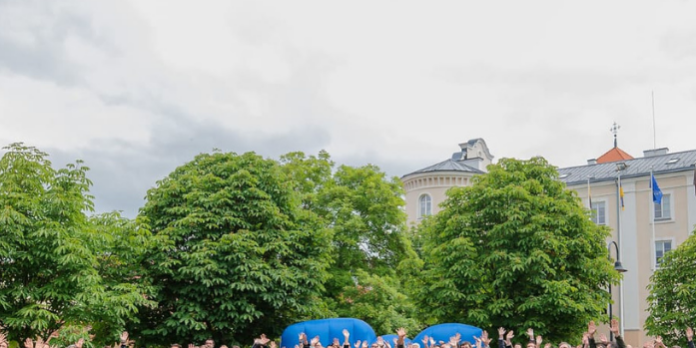
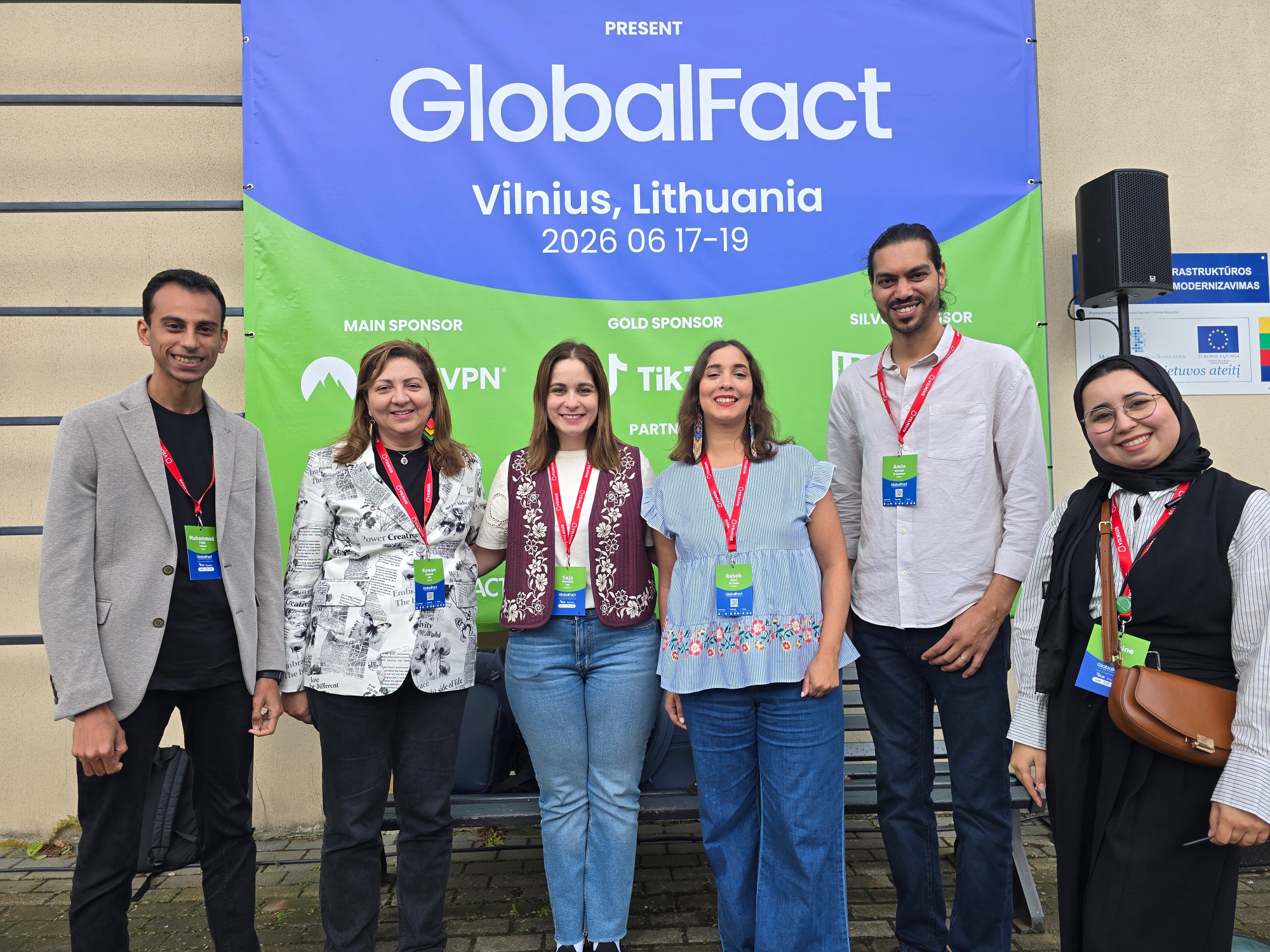
More than 300 fact-checkers, journalists, researchers and information integrity experts from across the globe gathered in Vilnius for GlobalFact 13, the world’s leading fact-checking summit. Organized by the International Fact-Checking Network (IFCN) in partnership with regional and international organizations, the conference came at a critical moment for journalism and democratic resilience. As artificial intelligence accelerates the spread of misinformation and economic pressures challenge independent media, GlobalFact 13 provides a space for collaboration, innovation and collective action.
Over three days (June 17 – 19, 2026) of discussions, workshops and networking sessions, participants explored how fact-checking can evolve to meet new threats while maintaining the values of transparency, accountability and public service that define the profession.
A limited but active Arab presence
The conference opened with a moment of silence in memory of our colleague from Sawab in Lebanon Alaa Salman. The IFCN later issued a statement on her killing in an Israeli airstrike that hit her family’s home in southern Lebanon.
Sawab, together with ARIJ (Jordan), Maharat (Lebanon), Kashif (Palestine), She Checks and Annir (Libya), BN Check (Tunisia), Beam Reports (Sudan) and Akhbar Meter (Egypt), is part of the Arab fact-checkers Network community, and is among the signatories to the International Fact-Checking Network (IFCN) Code of Principles.
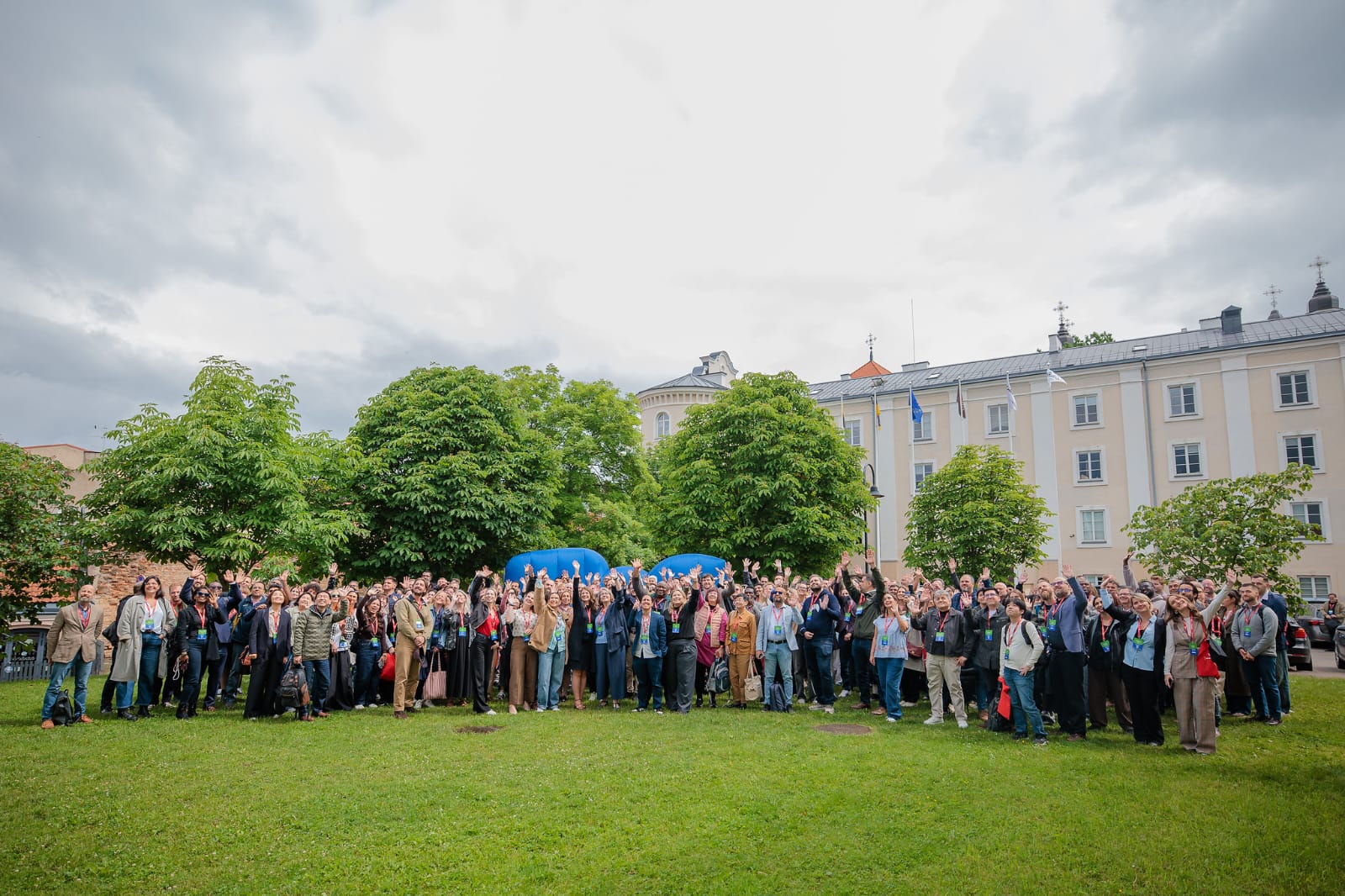
ARIJ and its Arab Fact-Checkers Network (AFCN) were represented at GlobalFact 13 by ARIJ Director General Rawan Damen, AFCN Manager Saja Mortada, and four fact-checkers: Rabeb Aloui (Tunisia), Ameen Otle (Jordan), Mohamed Tolba (Egypt), and Yasmin Laabi (Morocco). From the AFCN community there were also Layal Bahnam (Lebanon, Riham Abuaita (Palestine) and Ghiath Aljundi (Syria).
The AFCN delegation actively engaged with the global fact-checking community, strengthening relationships with regional networks, exchanging experiences and best practices, and exploring opportunities for collaboration on cross-border investigations and misinformation monitoring initiatives.
AI, misinformation and the new information battlefield
Artificial intelligence was a major theme of this year’s conference, with speakers exploring both the benefits and risks of generative AI.
Participants highlighted AI’s potential to support fact-checkers through faster research, translation and content analysis, while warning about increasingly sophisticated AI-generated misinformation, including fake images, audio and videos.
Many speakers said the challenge is no longer just identifying false information, but keeping up with technologies that can produce convincing content faster than fact-checkers can verify it.
Learning from the frontlines of disinformation
The location of this year’s conference added particular significance to discussions about information warfare and foreign influence operations.
Sessions examined Russian influence networks and coordinated disinformation campaigns, with journalists sharing methods for tracing digital manipulation and exposing covert operations.
Speakers stressed that misinformation is increasingly tied to broader political and geopolitical struggles over information and trust.

Tackling the global rise of online scams
Another major focus of GlobalFact 13 was the rapid expansion of online scams, many of which increasingly rely on AI-generated content and impersonation techniques.
Fact-checkers and researchers presented case studies showing how criminals exploit public trust through fake celebrity endorsements, fraudulent investment schemes and manipulated digital identities.
Participants discussed strategies for identifying emerging scam narratives and improving public awareness before harm occurs.
Reaching audiences where they are
As news consumption habits continue to evolve, GlobalFact 13 devoted significant attention to audience engagement and innovative storytelling.
Speakers highlighted the growing use of short-form fact-checking videos on platforms such as TikTok, Instagram Reels and YouTube Shorts to reach younger audiences.
They stressed that adapting content for social media does not require sacrificing rigor, but presenting verification in clear and engaging ways.
Sustainability, collaboration and the future
Throughout the conference, participants returned to a common concern: sustainability.
Many fact-checking organizations face shrinking resources even as demand for reliable information continues to grow. Sessions explored new funding models, partnerships and strategies for maintaining editorial independence while ensuring long-term viability.
The conference also highlighted international collaboration, with fact-checkers sharing tools, methodologies and lessons learned across borders.
ARIJ and AFCN Participation
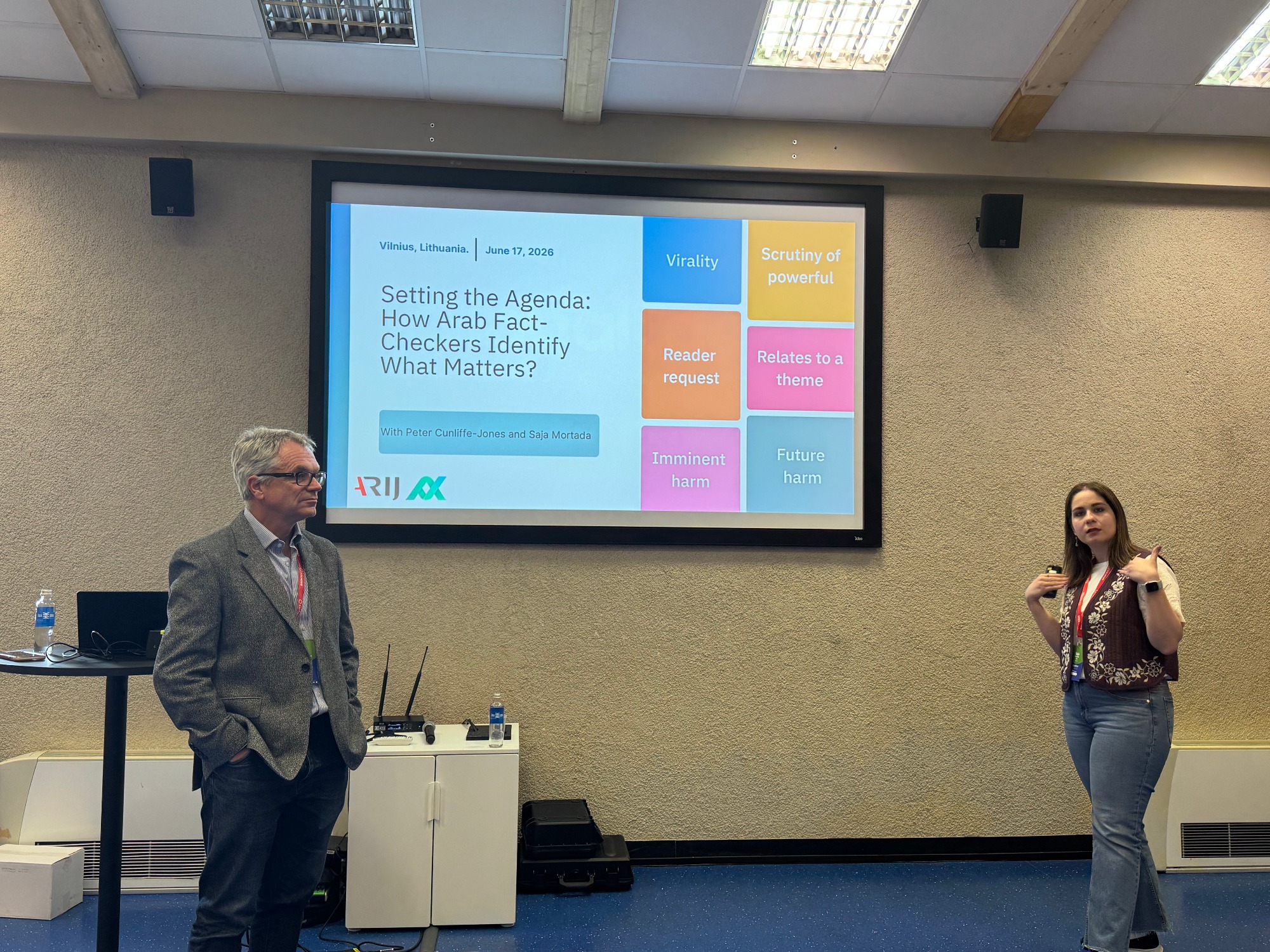 AFCN contributed to the conference through the session “Setting the Agenda: How Arab Fact-Checkers Identify What Matters?”, presented by Mortada and the Visiting Researcher at the University of Westminster Peter Cunliffe-Jones. Drawing on findings from a 2025 AFCN study and workshop in Amman, the session explored how fact-checkers prioritize claims for verification, particularly by assessing their potential harm, public impact, and accountability value. The findings showed that participating organizations increasingly seek to adopt more systematic approaches to selecting claims in an environment of limited resources and growing misinformation.
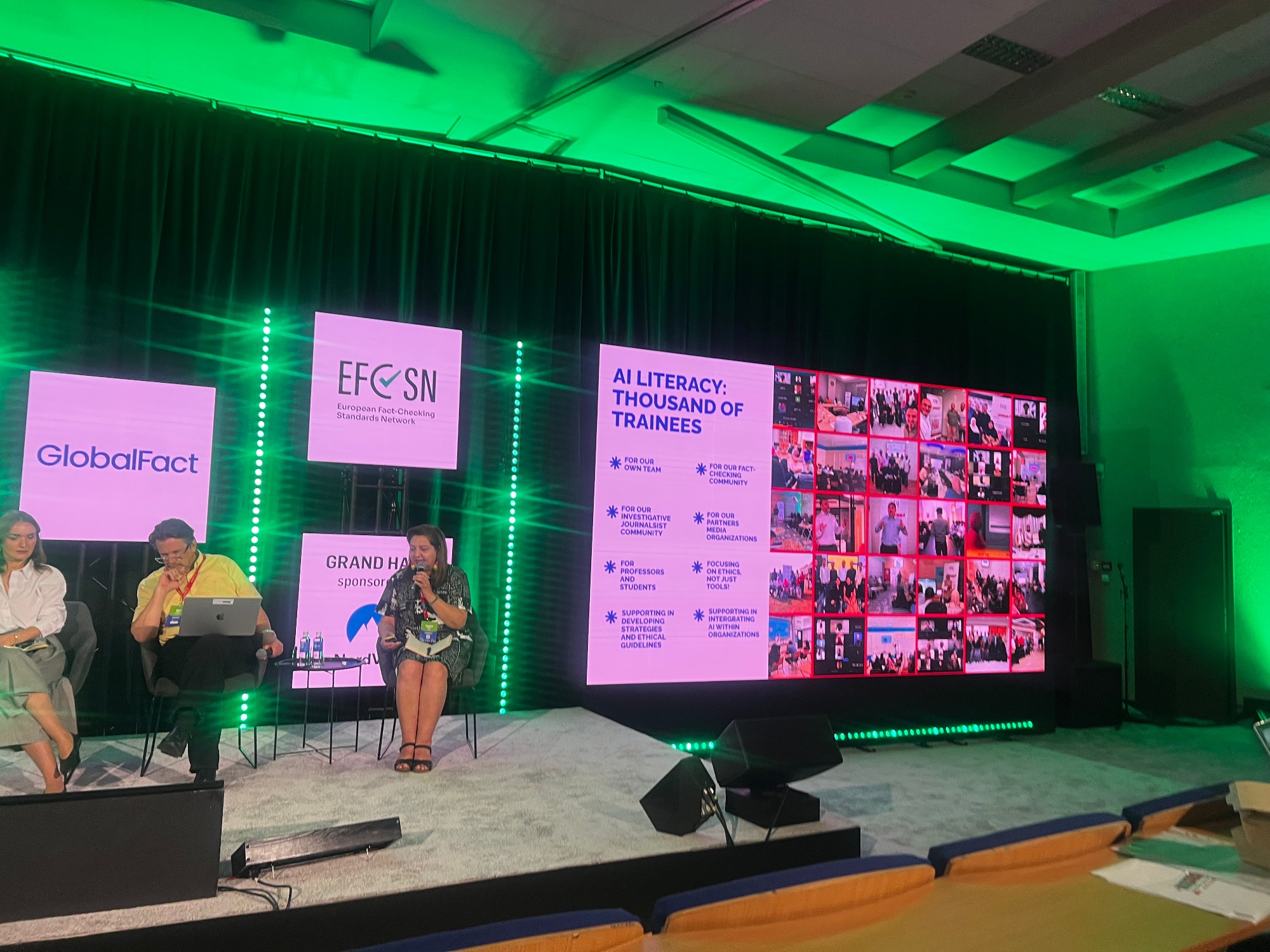 ARIJ also took part in the panel “The AI Threat: The Answer Economy and the Vector for Chaos,” where Damen joined international experts to discuss the impact of artificial intelligence on information integrity and fact-checking. She highlighted ARIJ’s efforts to promote AI literacy and ethical AI use among journalists and fact-checkers across the Arab world, as well as the organization’s growing focus on investigating the risks and accountability challenges associated with emerging technologies.
Rabeb Aloui from BN Check Tunisia participated in a session titled “Climate and the Environment: Bridging the Gap from Denial to Delay,” while Layal Bahnam from Maharat Lebanon joined a panel discussion on fact-checking in conflict zones with fellow fact-checkers from Iran, Ukraine, and Pakistan.
Celebrating excellence in fact-checking
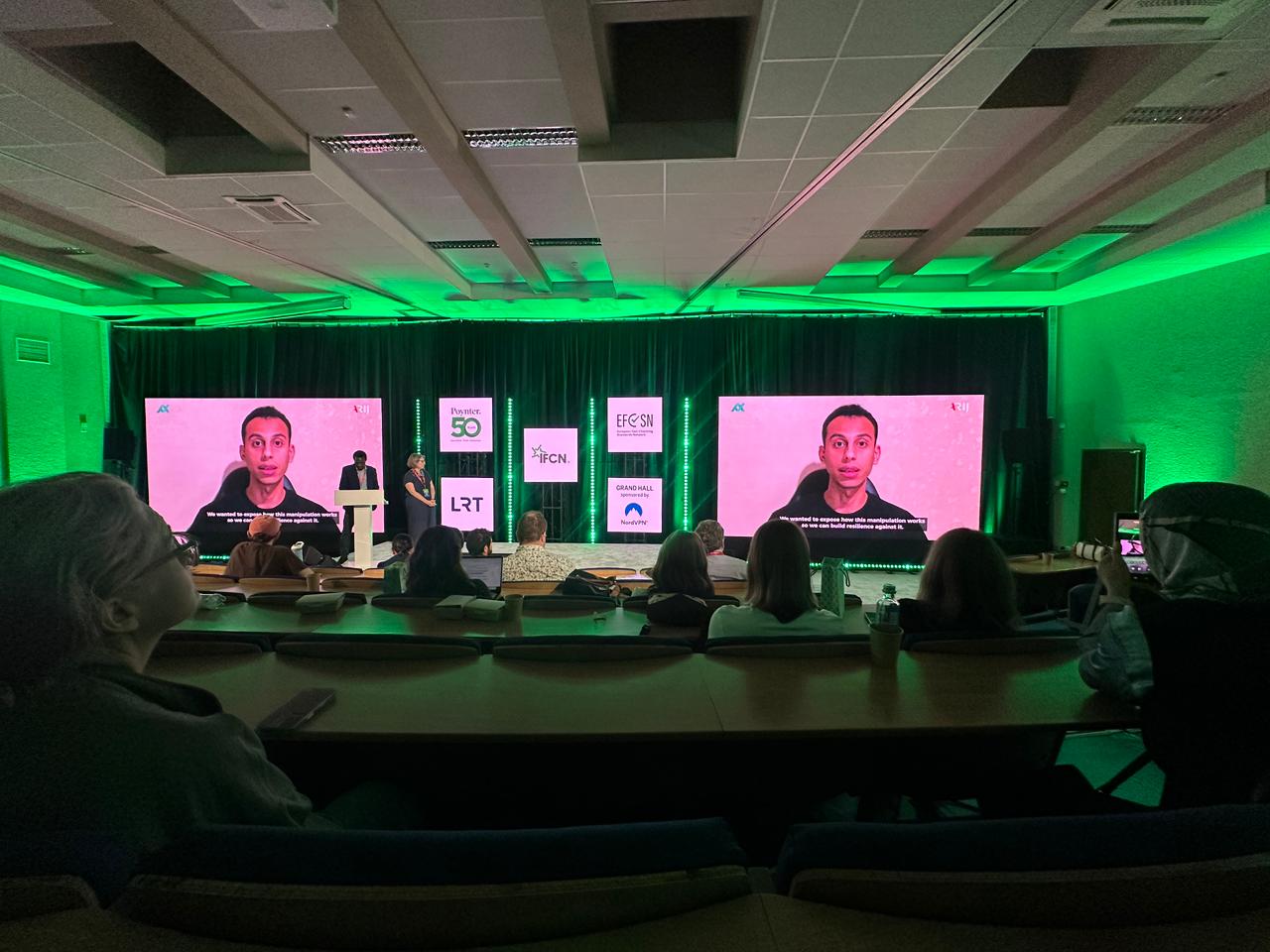 GlobalFact 13 also celebrated excellence through the Global Fact-Checking Awards.
The winners highlighted innovative investigations and effective approaches to combating misinformation, showcasing the diversity of the global fact-checking community. The awards underscored a broader message: despite growing challenges, fact-checking continues to make a meaningful impact worldwide.
The award winners are:
–Pravda Association (Poland) for the Global Fact-Checking Award for Impact
–EFE Verifica (Spain) for the Global Fact-Checking Award for Creative Format
–TjekDet (Denmark) for the Global Fact-Checking Award for Collaboration
–International Centre for Investigative Reporting/FactCheckHub (Nigeria) for the Global Fact-Checking Award for Gold Standard. ARIJ investigations “Cyberstorm: Petroleum accounts lead disinformation campaign on climate change” was one of the 3 finalists of the Global Fact-Checking Award for Gold Standard and the only Arab finalist in all categories.
Our Team Voices from GlobalFact 13
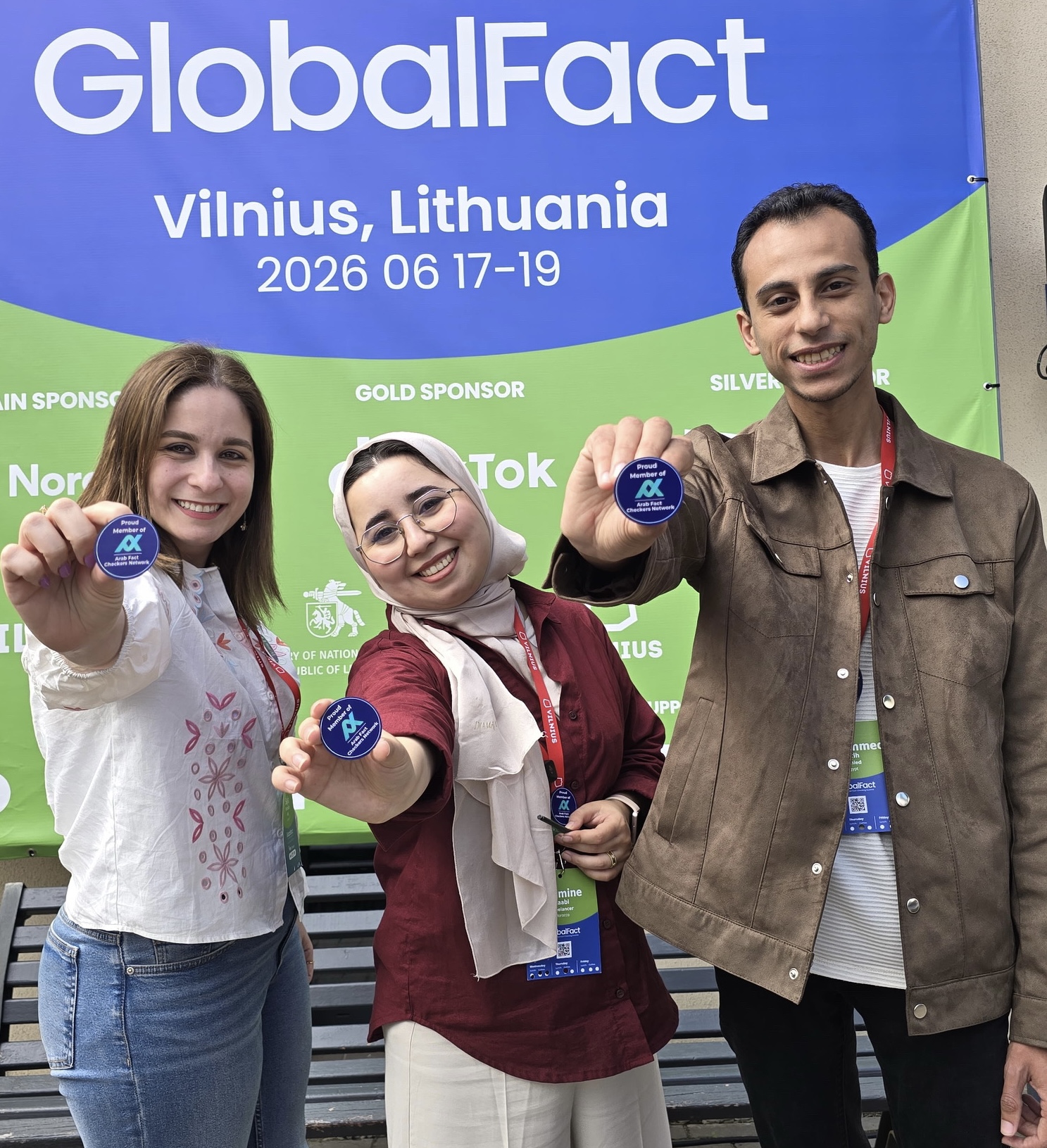 “My participation at GlobalFact reinforced a simple truth: the fight against climate disinformation is a fight for accountability, evidence, and the right of communities to make decisions based on facts rather than manipulation. When climate narratives are distorted for political gain, the cost is measured not only in public trust but also in delayed action on a crisis that affects millions.”
Rabeb Aloui (Tunisia)
“My first participation in GlobalFact was a truly enriching experience. Beyond the sessions and workshops, I had the opportunity to connect with colleagues from different countries and backgrounds. The conference reinforced my belief that meaningful impact can only be achieved through collaboration, knowledge-sharing, and professional solidarity. I returned more motivated than ever to continue combating disinformation and defending people’s right to accurate information.”
Mohamed Tolba (Egypt)
“GlobalFact 2026 reminded me that there is still hope, and there are still people searching for the truth. Meeting fact-checkers and journalists from around the world reaffirmed the importance of the work we do in the Arab region. The strong interest in understanding and documenting facts, particularly regarding Gaza and Lebanon, was both encouraging and inspiring. Many thanks to the ARIJ’s AFCN for making this opportunity possible.”
Ameen Otle (Jordan)
“After years of following GlobalFact remotely, attending the conference this year was the fulfillment of a professional goal. Spending 3 days alongside hundreds of fact-checkers from around the world, exchanging experiences and ideas, gave me renewed energy and inspired new approaches to further develop my work in fact-checking and verification.”
Yasmin Laabi (Morocco)
Looking Ahead
“Don’t quit, my fellow fact-checkers. Rest if you must. But don’t quit” – IFCN Director, Angie Drobnic Holan
As GlobalFact 13 concluded in Vilnius, participants left with renewed urgency but also renewed optimism. The challenges facing fact-checking have never been more complex, from AI-driven misinformation to coordinated influence operations and increasingly sophisticated online scams.
Yet the conference also demonstrated the resilience of a global community dedicated to defending evidence-based journalism. In a rapidly changing information landscape, GlobalFact continues to serve as a vital gathering point for those committed to ensuring that facts remain accessible, verifiable and central to public discourse.