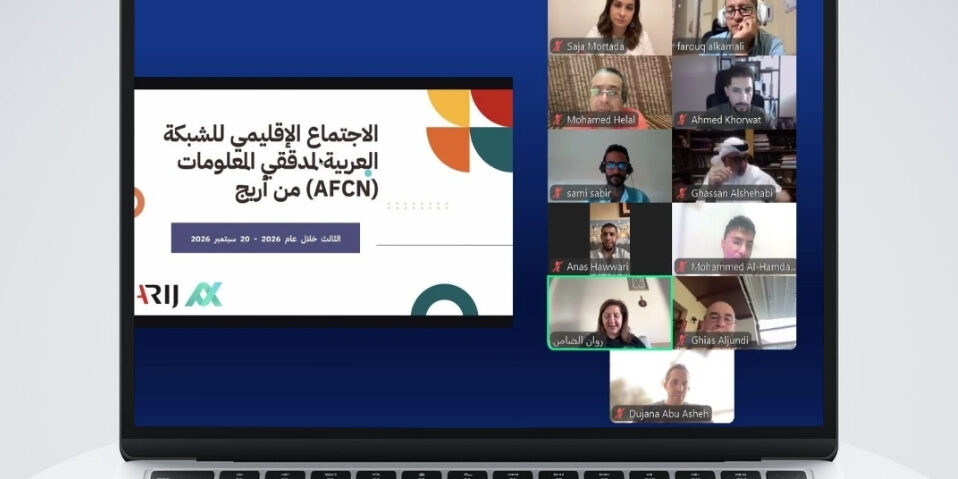
ARIJ’s AFCN Convened Its 3rd Regional Meeting of 2026
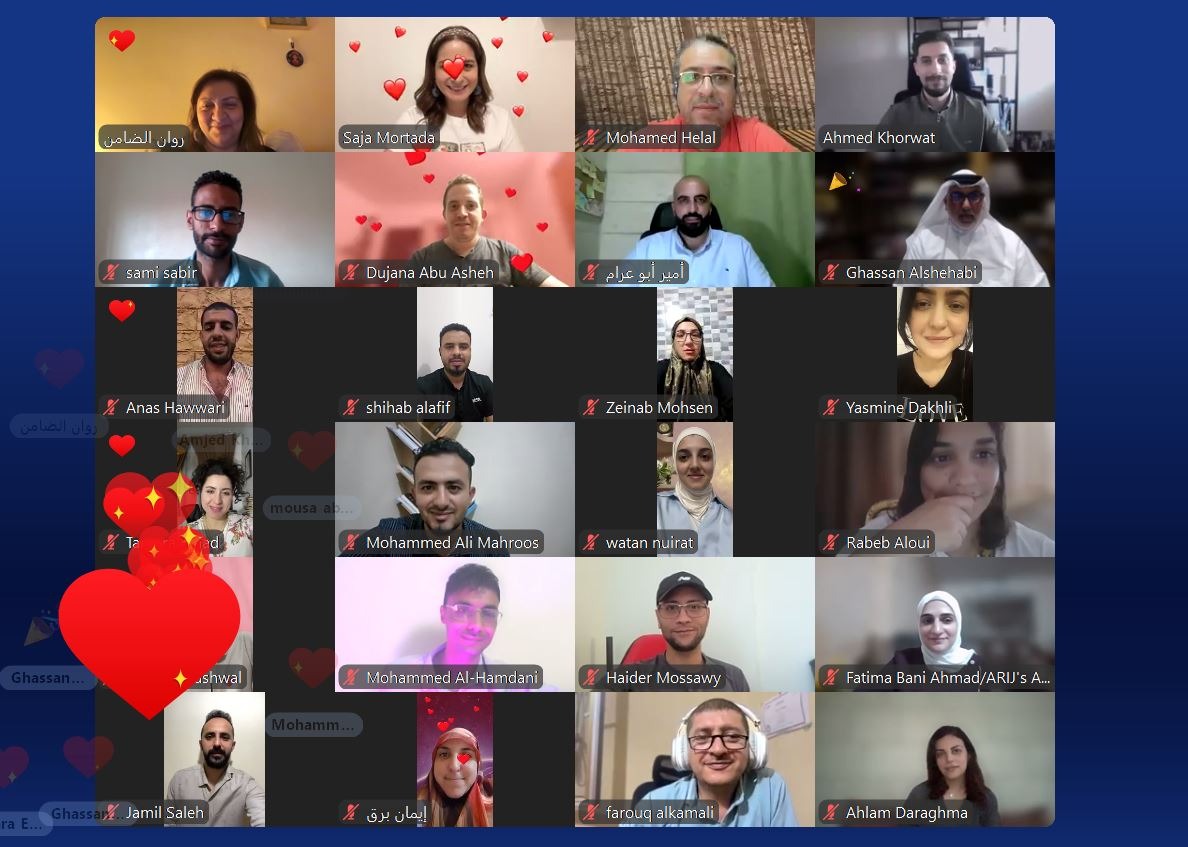 September 20, 2026
The Arab Fact-Checkers Network (AFCN) by ARIJ convened its third regional meeting for 2026, focusing on enhancing inter-organizational cooperation and addressing emerging disinformation trends across the Arab region.
ARIJ Director General, Rawan Damen, opened the meeting by welcoming 46 participants representing 22 fact-checking organizations and initiatives across 11 Arab countries. Showcasing investigative reports on disinformation networks produced by ARIJ in 2026, Damen highlighted the vital role of the fact-checking community in conducting deep investigative work to expose complex disinformation campaigns.
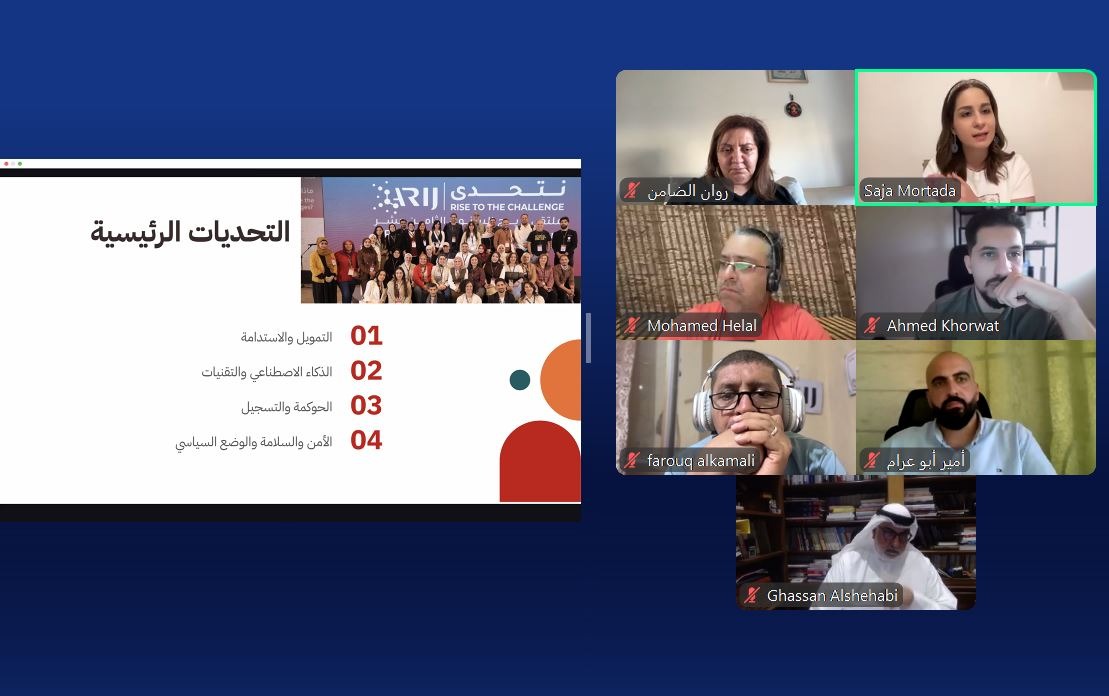
During the meeting, AFCN Manager Saja Mortada reviewed key updates on Meta’s platform policies, including the expansion of the “Community Notes” feature to new regions worldwide, encouraging members to test and evaluate the feature. Additionally, follow-ups on member requests submitted to Meta during the first regional meeting of 2026 were presented alongside actionable solutions.
Mortada also summarized findings from bilateral meetings held in July and August 2026 with AFCN organizations to assess evolving challenges and recommendations. Based on these insights and AFCN’s theory of change review, key strategic priorities for the upcoming period include:
– Expanding technical training and strengthening financial sustainability and fundraising capacity.
– Evaluating compliance with the Code of Principles through an independent external assessor.
– Hosting interactive brainstorming sessions and specialized workshops on investigating disinformation networks.
– Developing and refining standardized frameworks to measure the impact and harm of disinformation.
– Supporting organizations in attaining International Fact-Checking Network (IFCN) signatory status.
– Enhance collaboration through joint initiatives and resource sharing.
A major focal point of the discussions was gender-based disinformation. Tamara Emad, an independent fact-checker from Iraq, highlighted the complexities of fact-checking online hate speech targeting women: “These campaigns often operate within closed networks using forged documentation. Traditional verification methods risk amplifying exposure and harm to victims, making it essential to adopt clear methodologies grounded in the ‘do-no-harm’ principle.”
Similarly, Ruwaida Al-Arabi of Libya’s “She Checks” emphasized the need for specialized partnerships, expressing interest in joint initiatives and joint funding applications leveraging specialized expertise in countering gender-based campaigns.
This follows ARIJ’s recent investigation into systematic smear campaigns targeting female humanitarian workers in Yemen across social media and local platforms, which caused severe social stigma and security risks for victims without accountability for perpetrators.
Participants also addressed legal and security hurdles, financial constraints, and the proliferation of emerging accounts spreading false claims. The meeting concluded with practical recommendations to foster cross-organizational pairing, resource-sharing, and technical exchange to mitigate operational gaps.
In this context, Mohamed Ahmed Al-Madhaji from “Sidq Yemen” underscored the need for better coordination to prevent duplicated efforts, stating: “Establishing clearer coordination channels will ensure fact-checkers across different countries do not spend valuable time investigating identical claims independently.”
Furthermore, Yasmine Dakhli, Editor-in-Chief of Tunifact, urged organizations to adopt a proactive approach to funding constraints: “Rather than being hindered by financial obstacles, we must develop adaptive, sustainable solutions aligned with evolving funding landscapes.”
Supporting this view, Mahmoud Ghazayel, an independent fact-checker from Lebanon, suggested: “To address resource gaps, we can pool tools, AI subscriptions, and software access across our network rather than relying solely on direct grants.”
Mabrouka Shalshoul, an independent fact-checker from Tunisia, concluded with a message of solidarity: “It is vital to recognize that the challenges we face as fact-checkers are shared across borders. Meetings like this reinforce our collective purpose and joint responsibility.”
This gathering marks the 19th meeting in a regular series convened by ARIJ’s AFCN, serving as a crucial platform to promote cross-border collaboration, resource sharing, and resilience against information disorder in the region.