ARIJ’s AFCN Trains 100+ Journalists on Investigating Disinformation

April 27, 2025
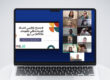
The Arab Fact-Checkers Network (AFCN) from ARIJ, held a specialized virtual training titled “Investigating Disinformation”, with the participation of over 100 trainees from across the Arab world.
The training spanned two sessions, held on April 13 and 27, 2025, and was led by award-winning Canadian journalist Craig Silverman, an expert in tracking and analyzing disinformation campaigns. The sessions were moderated by ARIJ’s coach Mohamed Komani.
The training focused on enhancing participants’ investigative skills in disinformation cases using a rigorous journalistic methodology. Silverman introduced a range of tools and concepts to help participants understand the dynamics of digital disinformation and analyze its content.
On the first day, the trainer emphasized that in disinformation investigations, nothing surpasses the power of sharp observation and analytical thinking. He advised trainees to always begin by identifying anomalies in the behavior of individual accounts, which could potentially lead to uncovering broader networks.
In addition, he stressed the importance of focusing on behavioral patterns, keywords, and account activity, rather than searching aimlessly—stating that bios, interactions, and content are mirrors of intent, and that every account leaves a digital trace that can be followed.
In the second session on April 27, 2025, Silverman shared practical tips to help journalists and fact-checkers tackle the complexities of disinformation campaigns. He highlighted the importance of strict methodologies in analyzing misleading websites and ads, beginning with monitoring and ending with in-depth technical analysis.
Tools like WHOIS, DNSlytics, and BuiltWith were introduced to uncover ownership ties and technical links between websites. He also demonstrated how to investigate through Meta’s Ad Library and reminded participants that investigations rely not only on technology, but also on human analytical skills and local sources for contextual understanding. He underlined the importance of honesty with audiences, acknowledging what cannot be verified, and using responsible language when dealing with uncertainty and ambiguity.
Adnan Al-Mansouri, a fact-checker from Yemen, said the training directed him toward the digital investigations field he has long aspired to enter, especially in disinformation cases.
From her side, Radhia Al-Sharabi, an independent journalist from Tunisia, affirmed that the training content is essential for journalism in general, and for investigative work in particular, especially when tracing deceptive information and hidden connections. She highlighted how understanding the behavior of platforms and social media “helps build public trust and contributes to greater transparency and comprehension of the wider media landscape”.
At the end of the training, ARIJ’s AFCN invited participants to submit ideas for investigative projects tackling disinformation, in order to receive editorial and professional support from ARIJ. Proposals are to be submitted by June 30, 2025, via this link.
It is worth noting, that this training is part of a broader series of programs organized by ARIJ’s AFCN, aimed at strengthening the skills of journalists and fact-checkers across the Arab region in combating disinformation and equipping them with the tools needed to produce accurate and impactful investigations.